Latest News: What Do Farmed Fish Eat? News 24/7
For more than thirty years the Foundation invested in ideas and organizations fostering systemic regional change in early childhood and the environment. Confronting the challenges of moving these issues forward and the obstacles impacting sustained regional change, the Foundation invested in an annual report of objective data and analyses on the region’s economy, communities, health, education, environment and governance. These reports, known as the Long Island Index, were published from 2003-2018.
Seeking a broad collection of ideas and opportunities, the Index was formed as a cross-sector partnership of thought leaders from business, labor, community groups, health care, and academic and research institutions. It was this sustained partnership that enabled the Index to have an outsized impact on the region, including:
A forthcoming book by Nancy Rauch Douzinas explores the Foundation's history and its role in bringing together a cross-sector alliance of regional leaders to create the Index as an important lever for addressing some of the region's most complex issues.
For more insight into how the Foundation made public private alliances a force for change, read Nancy's piece in Stanford Social Innovation Review.
The Index used various media to illustrate the issues taking place in the region. These videos, for example, stressed the urgency of coming together to address these issues collectively.
For seven years, the Index published indicators and analyses to measure the region's progress along with in-depth research reports on specific topics. From 2012 to 2018, detailed analyses of specific issues took the place of indicators until a culminating report was published in 2018.
One of the cornerstones of the Index was the publication of survey reports. With approximately a dozen questions asked with each survey, the Index was able to track shifting attitudes about life in the region.
Long Islanders Want More Housing Options (2017)
Housing Choice and Affordability on Long Island (2015)
Looking Ahead on Long Island (2014)
Tracking Residential Satisfaction on Long Island (2012)
Long Island Looks to the Future: Housing Alternatives and Downtown Development (2008)
In a Tough Spot: Jobs, Taxes, and Affordability on Long Island (2006)
Where Do We Grow from Here? Regional Attitudes Towards Housing, Land Use, and Open Space (2004)
Room for Growth: Regional Attitudes Toward Work, Technology, and Housing (2003)
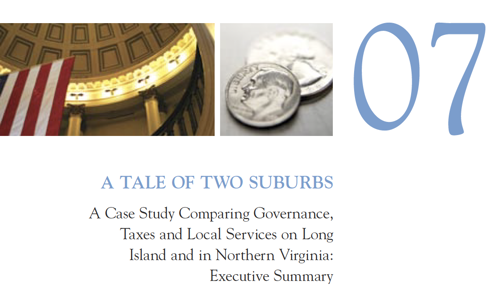
A Tale of Two Suburbs - One of the key characteristics of Long Island's structure is the multitude of political and special districts: 2 counties with 2 cities, 13 towns, almost 100 incorporated villages, and hundreds of police districts, fire districts, ambulance districts, sanitation districts, water districts, school districts and library districts - each with taxing authority and their own internal rules and election processes. In an in-depth comparison between taxes on Long Island and those in two economically similar counties in northern Virginia where districts are governed at the county level, the Index asked: if Long Island consolidated, could we lower our taxes? The answer was yes. A survey was conducted to rate satisfaction with services in the two regions and northern Virginia residents were significantly happier with the quality of their services than Long Islanders.
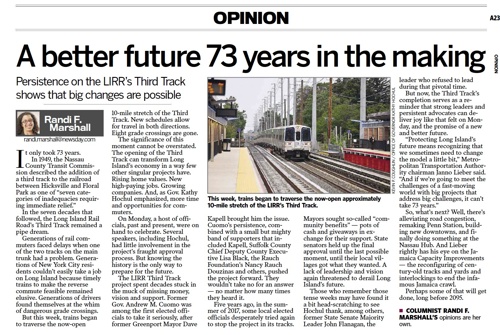
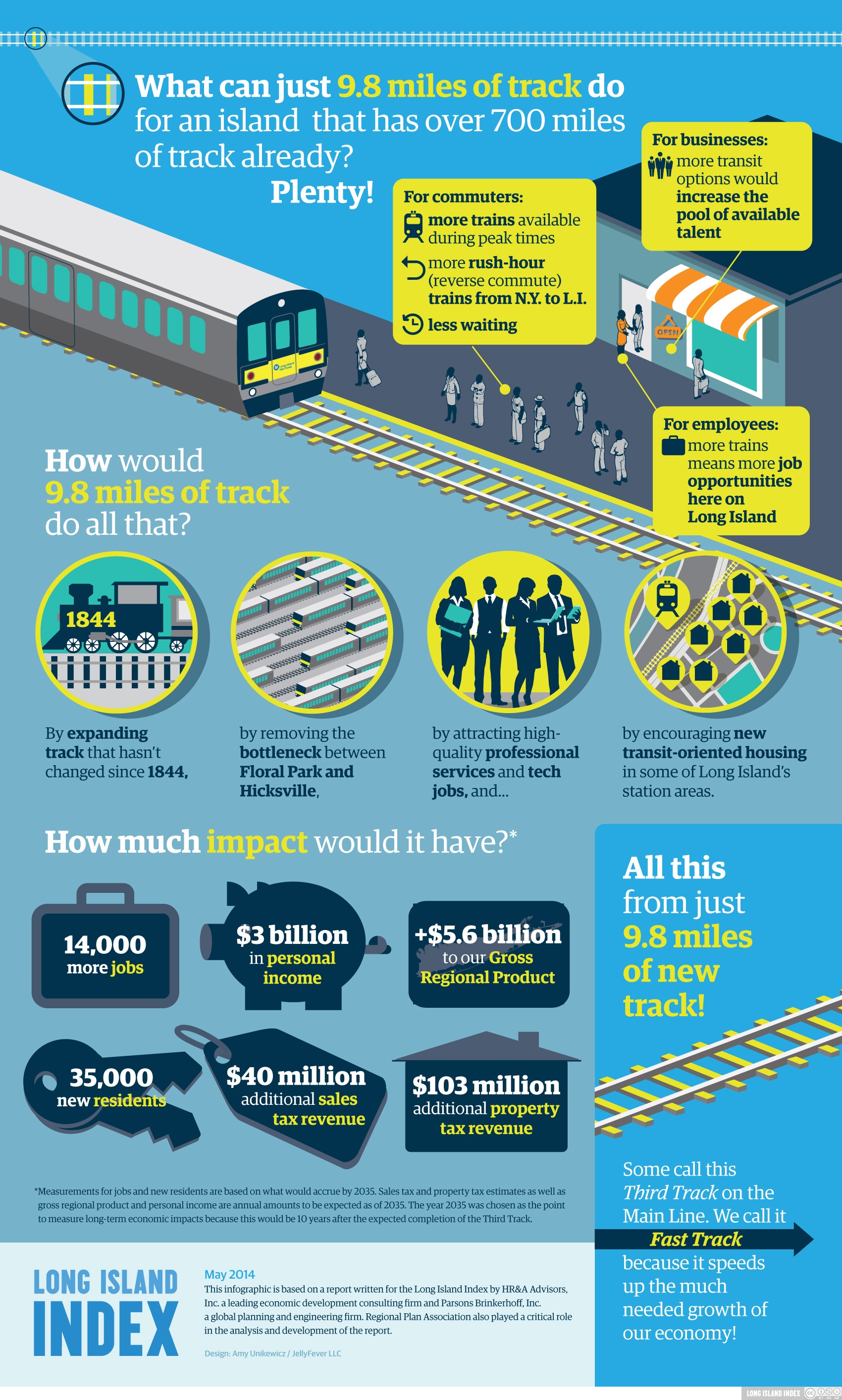
The Third Track - In 2014, the Index commissioned an economic analysis showing that a critical piece of infrastructure construction - 9.8 miles of third track on the Long Island Railroad - would reduce commuter congestion between Long Island and New York City and bring jobs, tax revenues, and opportunities to the region. The Foundation and Index took a calculated risk that offering solid data and broad, cross-sector regional support would drive the project forward. A key tool in sharing the data was this widely disseminated infographic that laid out the project's potential regional impacts. The project was completed - ahead of schedule and under budget in 2022, an accomplishment Newsday called "a can-do blueprint for the region." A full case study of the project ("Breaking Through") examined how smart partnerships overcame decades of resistance to modernize America's busiest railroad.
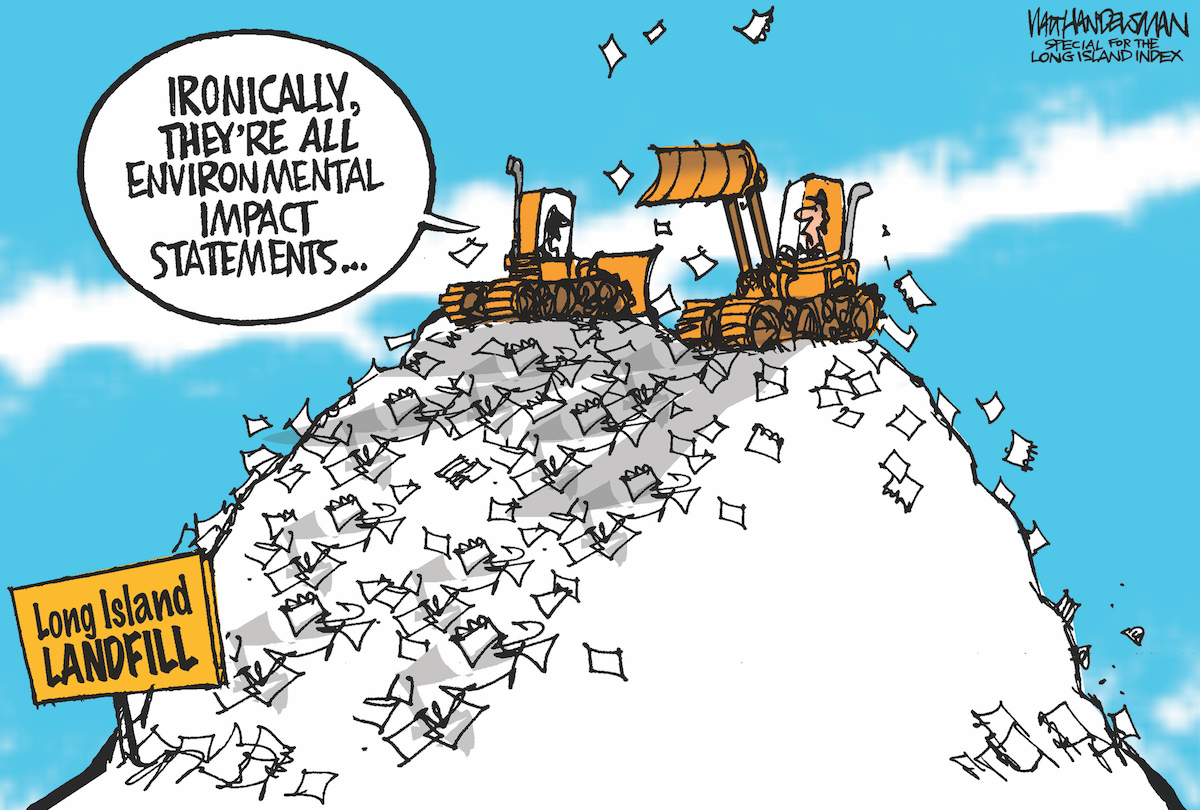
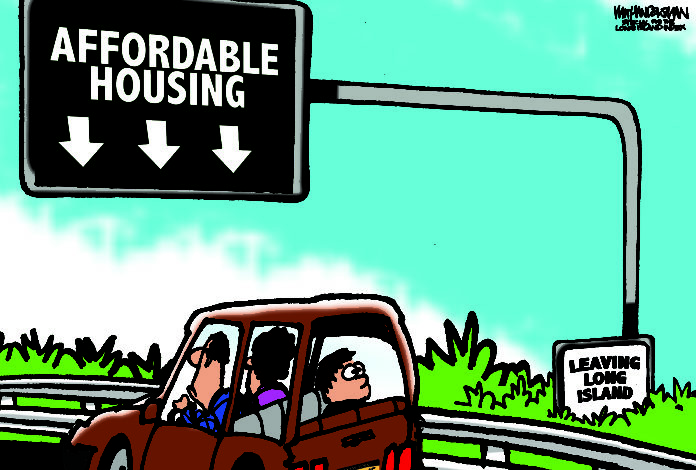
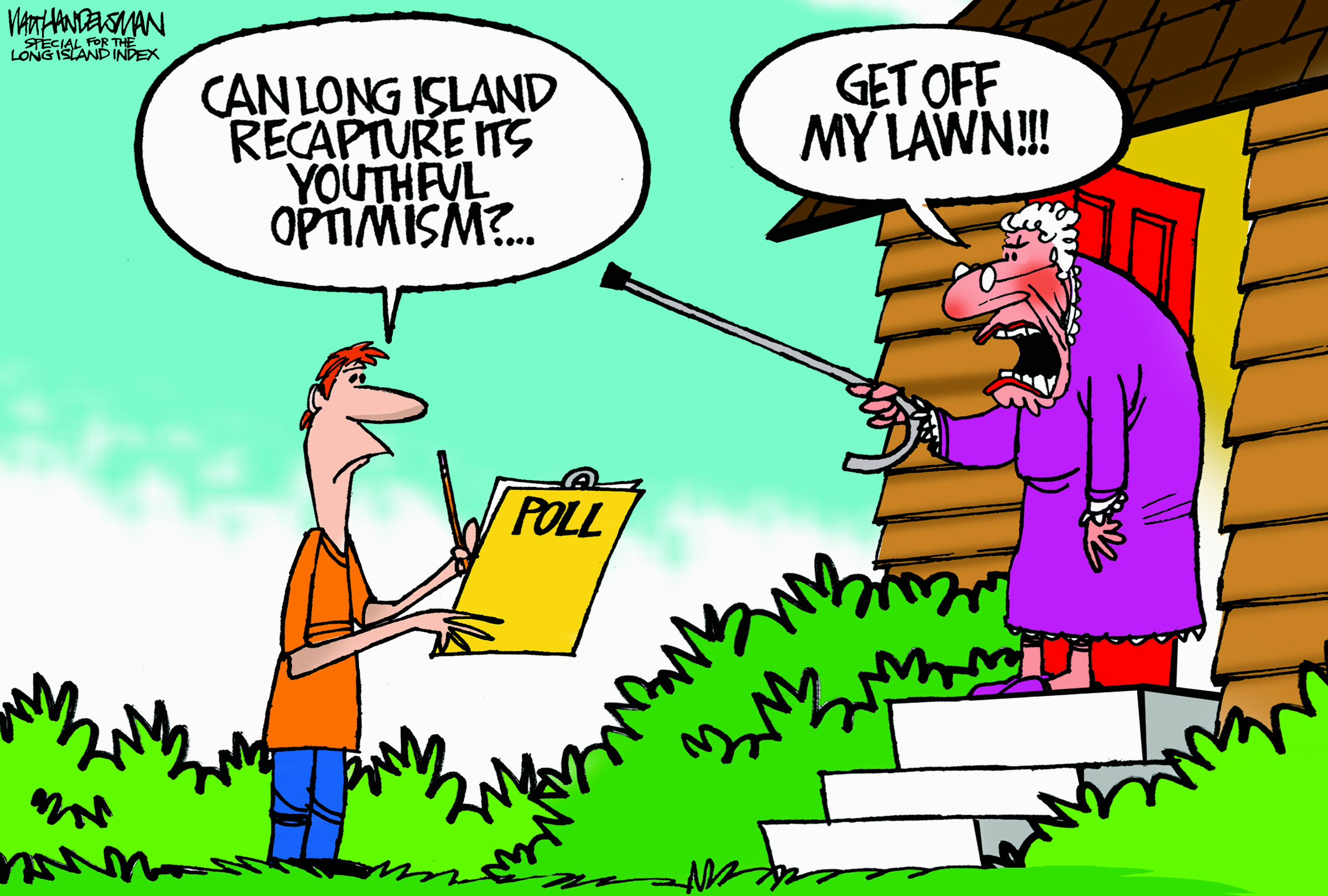
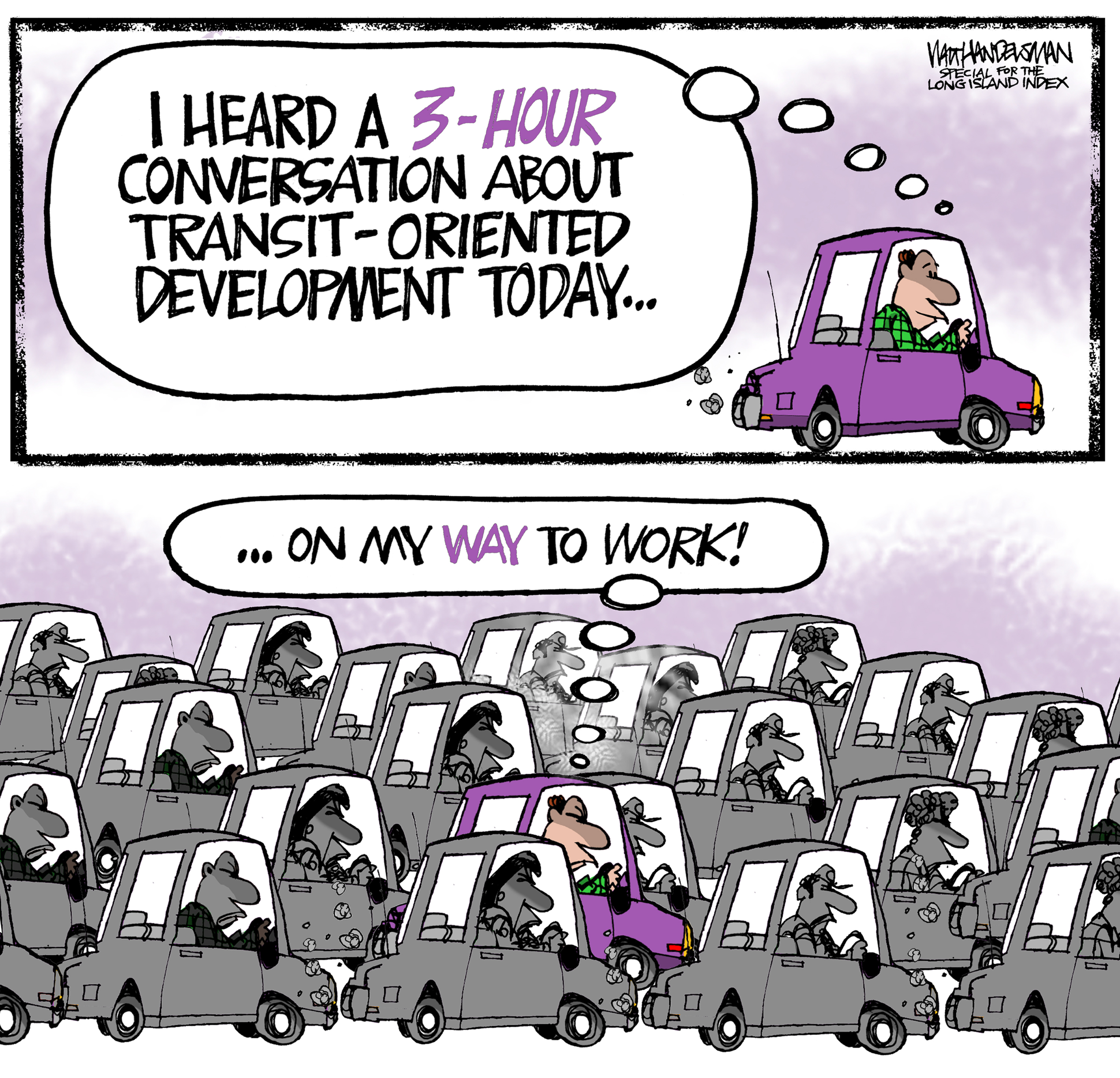
The Foundation commissioned two-time Pulitzer Prize-winning editorial cartoonist Walt Handelsman to illuminate public understanding of Long Island issues through his legendary artistry. He knows the region well through his 12 years at Newsday, where he won one of his Pulitzers. The cartoons he created are based on the Index's research in the areas of land use, zoning, affordable housing, and other high priority issues facing the region and reflect his unique take.
Education Reports - Among many of the complex issues on Long Island is the extreme segregation found within its education system. As districts were formed around communities and as those communities became more racially and economically segregated, so too did the schools. The Index studied this problem from a variety of perspectives to understand how it impacts students and the educational resources available to them. This in turn led to long-term partnerships with groups like ERASE Racism and Reimagining Education at Teachers College.
Inter- and Intra-District Segregation on Long Island (2012)
Why Boundaries Matter: A Study of Five Separate and Unequal Long Island School Districts (2009)
Educational Inequality on Long Island: Public Awareness and Support for Solutions (2008)
School Finance on Long Island: An Analysis of State and Local Funding Patterns (2008)
Early Childhood: Investing in Our Youngest Learners - One of the areas of particular interest to the Foundation was that of early childhood, and it supported a number of organizations working in this space. In 2016 the Foundation commissioned Fordham University researcher Abe Lackman to do a comparative analysis of US spending on 0-3 education, determine which investments in quality early childhood programs promise the highest return, and propose interventions to support young children and their families.
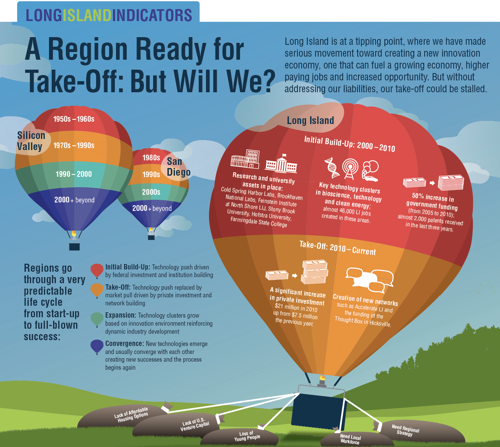
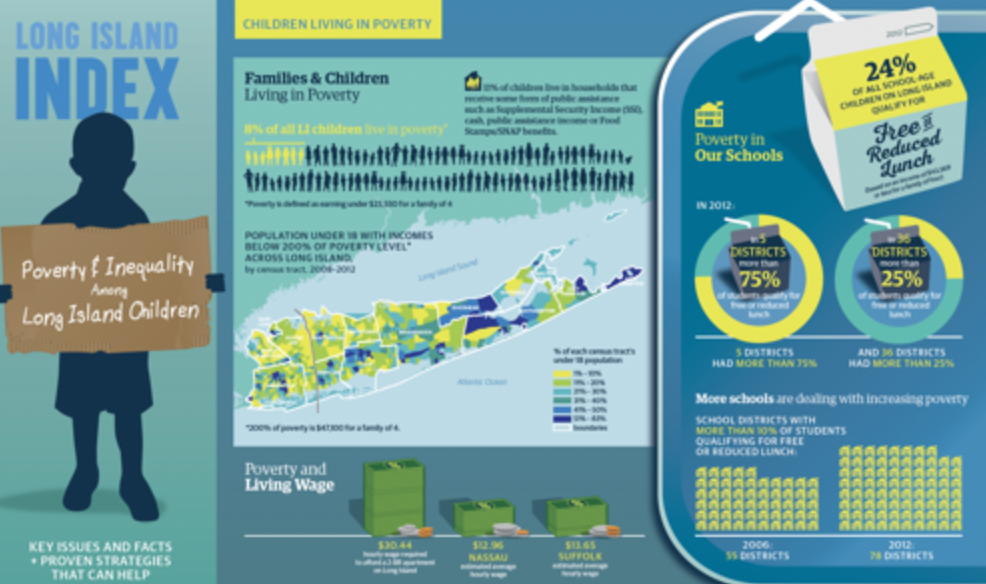
Through infographics, the Index was able to tie together data and research about specific policy topics. Working with Nigel Holmes we published our first infographic in the New York Times. Later with Jelly Fever Design we developed impactful infographics that presented our findings in a visual and engaging manner across Long Island. Published in dozens of local papers as well as Newsday and Long Island Business News, the infographics quickly conveyed a complex story.
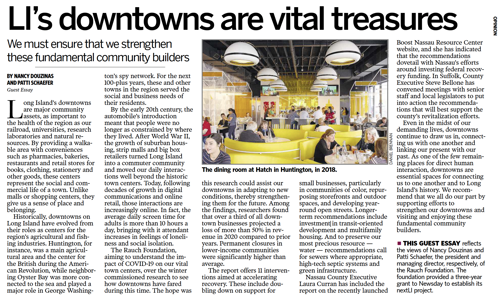
Housing and Downtown Development - The Index conducted a number of studies on housing and downtown development, which gained significant traction over the years with research on transit, mixed-use development, multi-family housing, and the connection with open space and overall land-use. Post-COVID, the Rauch Foundation commissioned a report on lessons learned during the pandemic and what interventions could be implemented to ensure that Long Island downtowns would thrive in the future as the hearts of their communities. More recently, the Foundation helped seed the creation of the Long Island Housing Coalition, led by ERASE Racism, focused on increasing access to affordable, inclusive, and well-located housing across Long Island.
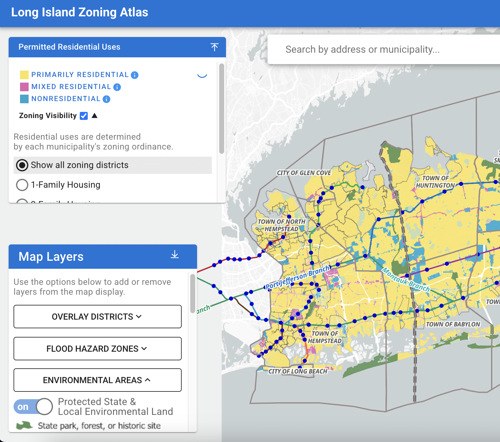
Interactive Maps - Long Island is a region made up of 2 counties, 13 towns, 2 cities, 90+ incorporated villages, and scores of unincorporated hamlets. Interactive maps became a powerful tool to demonstrate both Long Island's separateness and connectedness. Today, the initial set of interactive maps is no longer online, but the Foundation and multiple partners supported the launch of the Long Island Zoning Atlas, which contains much of the information originally part of the Index maps along with the introduction of zoning data for every municipality. All of the maps were developed in partnership with City University of New York's Mapping Service under the direction of Steven Romalewski.
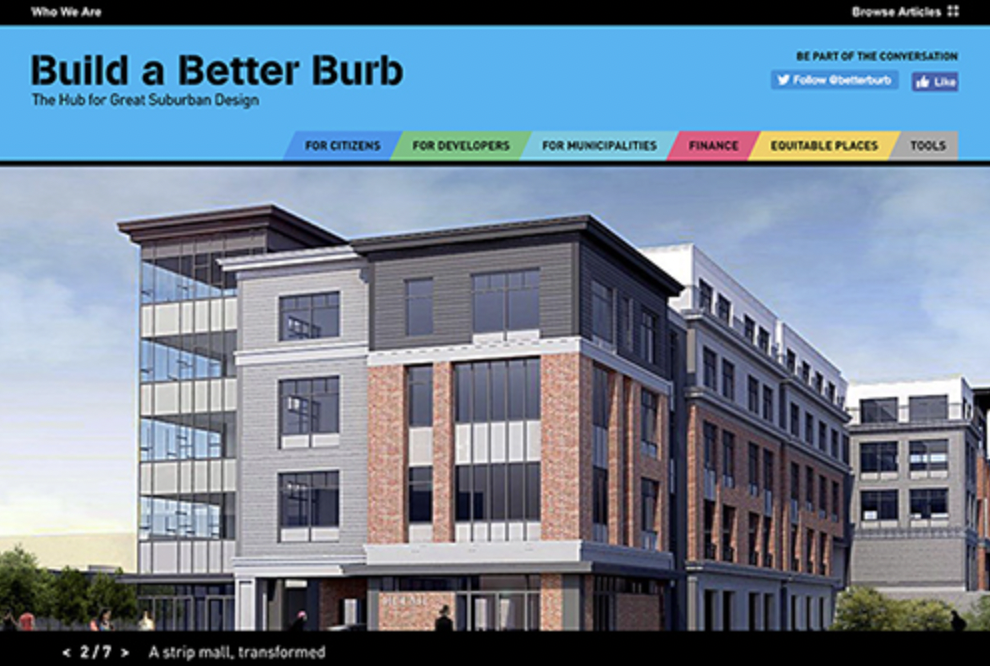
Build a Better Burb was a design hub borne out of a design competition sponsored by the Long Island Index in 2010. The competition called for bold ideas from architects, urban designers, planners, and visionaries for the underutilized land in Long Island's downtowns. The goal was to reimagine the possibilities for the region. The results of the initial competition in turn inspired the ParkingPLUS Design Competition, which revealed new concepts for parking design for the more than 4,000 acres of surface parking lots in and around Long Island's downtowns.
Building an Innovation Economy - One of the critical challenges identified by the Long Island Index was how to create a vital economy to generate high paying jobs for residents of Long Island. In 2010, a group of leaders from Long Island’s research institutions, businesses and local government began working together to identify ways to better connect the region’s innovation assets to stimulate entrepreneurship and job creation. To establish an objective baseline of information about the relative strengths and weaknesses of the region's innovation system and measure progress over time, the Foundation helped to seed an inaugural Index demonstrating how innovation assets of research and talent are translated into outcomes of new firms and good jobs. The end result of this collaborative effort was the formation of Accelerate Long Island, a regional initiative to promote innovation throughout the region.